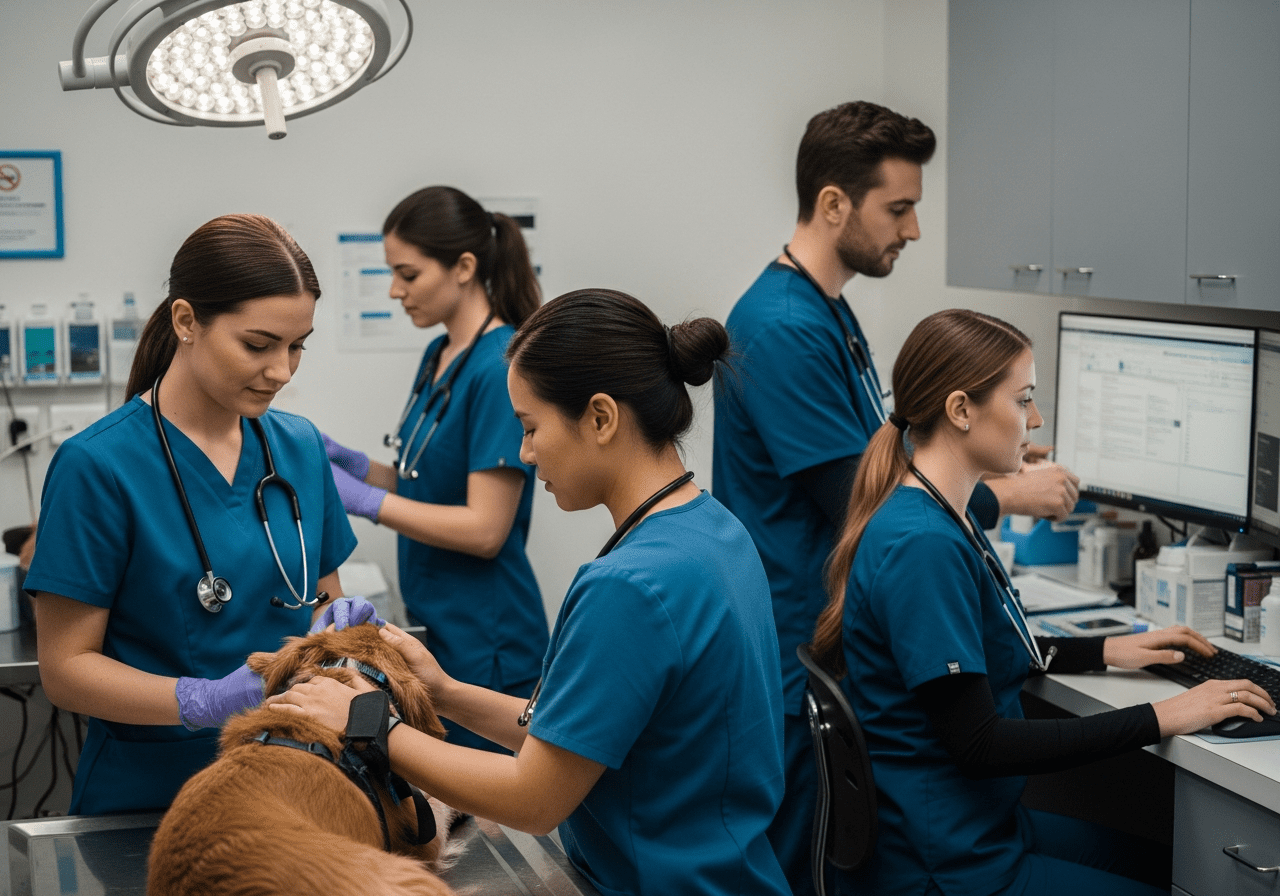
Musculoskeletal injuries are the leading cause of work-related disability among veterinary professionals. AVMA occupational health data shows that over 50% of veterinarians and veterinary technicians report chronic pain or injury related to their work — back strain from lifting and restraining animals, wrist and shoulder injuries from surgical and dental procedures, and repetitive stress from equipment operation. For clinic owners, this isn’t only a staff welfare concern. It translates directly into workers’ compensation costs, unexpected absences, and early career exits from staff you’ve invested in training.
Improving workplace ergonomics is one of the most cost-effective retention interventions available to a veterinary practice — and it is almost universally underprioritized until someone gets hurt.
The Retention Math: Why Injury Is a Staffing Crisis
When a veterinary technician develops a chronic repetitive stress injury, the staffing impact runs deeper than a short-term absence:
- Short-term: coverage gaps while the injured staff member is on modified duty or leave
- Medium-term: reduced productivity if they return to work with restrictions on lifting, restraint, or surgical assist duties
- Long-term: early departure from the profession — NAVTA surveys show that injury is a primary driver of veterinary technicians leaving clinical practice before age 50
Replacing a credentialed LVT in today’s shortage market costs $8,000–$15,000 in recruiting and onboarding, before accounting for productivity loss. A hydraulic lift table that prevents the most common lifting injuries costs $800–$2,000. The ROI math favors prevention by a significant margin.
The Most Common Injury Vectors in Veterinary Clinics — and What Fixes Them
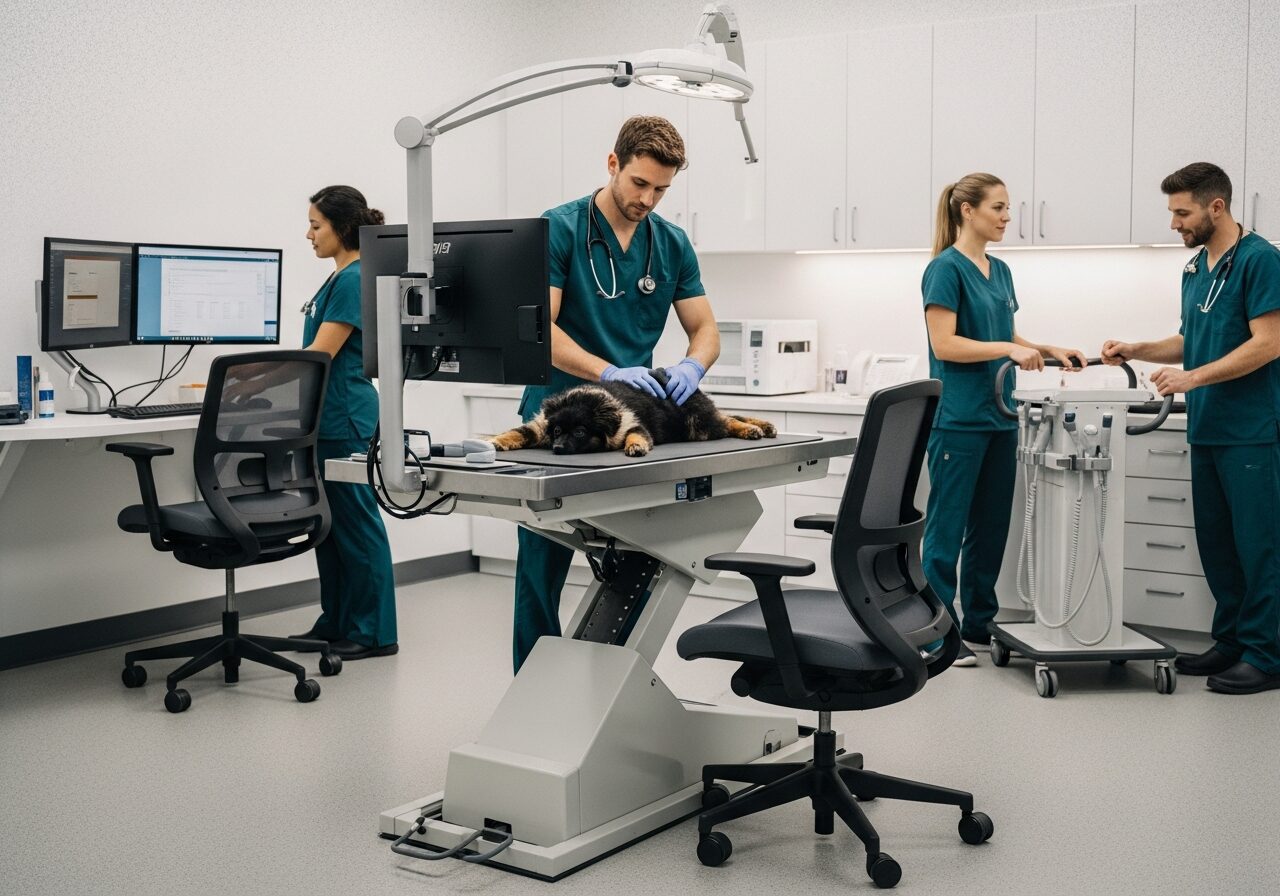
Lift table and exam table height: The most common cause of veterinary staff back injury is lifting or repositioning patients on exam tables at the wrong height. Fixed-height tables that require staff to bend significantly are the primary culprit. Hydraulic or electric lift tables that adjust to staff height eliminate this risk for the majority of exam-room encounters.
Employer action: Budget one adjustable-height exam table for every exam room where large-breed dogs or heavy cats are routinely handled. Electric lift tables range from $800–$2,500 per unit — a one-time cost against recurring workers’ comp claims.
Patient restraint positioning: Restraining fractious or large animals in awkward positions strains shoulders, wrists, and lower backs of the technicians holding them. Training in low-stress restraint techniques (Fear Free, low-stress handling) reduces the physical force required and improves staff safety alongside patient welfare.
Employer action: Fund Fear Free or low-stress handling certification for all clinical staff — typically $150–$200 per person. This is simultaneously a marketing differentiator and an injury prevention investment.
Dental and surgical positioning: Dental scaling, spay/neuter surgeries, and orthopedic procedures require prolonged static postures. Surgeons and dentally-focused DVMs are at particular risk for cervical spine and shoulder injuries from leaning over the table for extended periods.
Employer action: Surgical tables with tilt capability reduce the degree of forward flexion required. Anti-fatigue mats at surgical stations reduce lower extremity fatigue. Headlamps instead of overhead lights for dental procedures reduce neck extension.
Repetitive wrist and hand use: High-volume injection, blood draw, and IV catheter placement strains the forearm and wrist flexors of busy technicians. This is occupational overuse — not avoidable entirely, but manageable through rotation and workload design.
Employer action: Rotate high-repetition tasks across the team rather than assigning them to the same technician every shift. Track who is doing what at the task level — not just appointment counts — and rebalance when patterns emerge.
Building Ergonomics Into Your Hiring and Onboarding Process
Ergonomic workplace design is both a retention tool for existing staff and a recruitment signal for candidates evaluating your practice. DVMs and LVTs who have worked in practices with modern equipment know the difference — and they ask about it.
When onboarding new hires, include:
- A walkthrough of ergonomic equipment and how to use it correctly (adjustable tables, lift assist devices)
- An explicit conversation about injury prevention — signal that this is a priority, not an afterthought
- A clear process for reporting early symptoms before they become injuries — encourage staff to flag discomfort early, without fear of appearing weak or adding to workload
For job postings: “Fear Free certified practice with adjustable exam tables and modern surgical setup” is a one-line differentiator that signals to experienced candidates that you’ve invested in their physical safety.
Workers’ Compensation and the Financial Case for Prevention
Workers’ compensation premiums for veterinary practices are rated in part on claims history. A practice that has had three soft tissue injury claims in five years pays significantly more per employee in WC premium than one with a clean record. The cumulative cost of preventable injuries — WC premiums, modified duty coverage, replacement hiring — easily exceeds the cost of the ergonomic improvements that would prevent them.
Ask your WC carrier if they offer loss control consultations — many do, and a site assessment that identifies high-risk tasks can be conducted at no additional cost. Implementing the recommendations is an investment that pays back in premium reduction over time.
Hire Staff Into a Workplace That Keeps Them
The best hiring decision is one that lasts. Bringing credentialed veterinary professionals into an environment that injures them — and watching them leave the profession at 45 with chronic shoulder pain — is a waste of the recruitment investment and a loss to your team.
Pulivarthi Group places DVMs and veterinary technicians with practices that are invested in keeping their staff healthy and retained. When we brief candidates on a role, the physical environment matters to them — and practices that have invested in ergonomic equipment and safety culture retain placements longer. If you are rebuilding a team after departures, or want to position your practice as a destination employer for credentialed vet professionals, connect with our veterinary staffing team.
Sources
- AVMA Occupational Health Resources: Musculoskeletal Injury Data for Veterinary Professionals
- NAVTA Workforce Survey: Physical Health and Career Longevity Among Veterinary Technicians
- NIOSH (National Institute for Occupational Safety and Health): Healthcare Worker Ergonomics Guidelines
- Fear Free Professional: Low-Stress Handling Certification Program