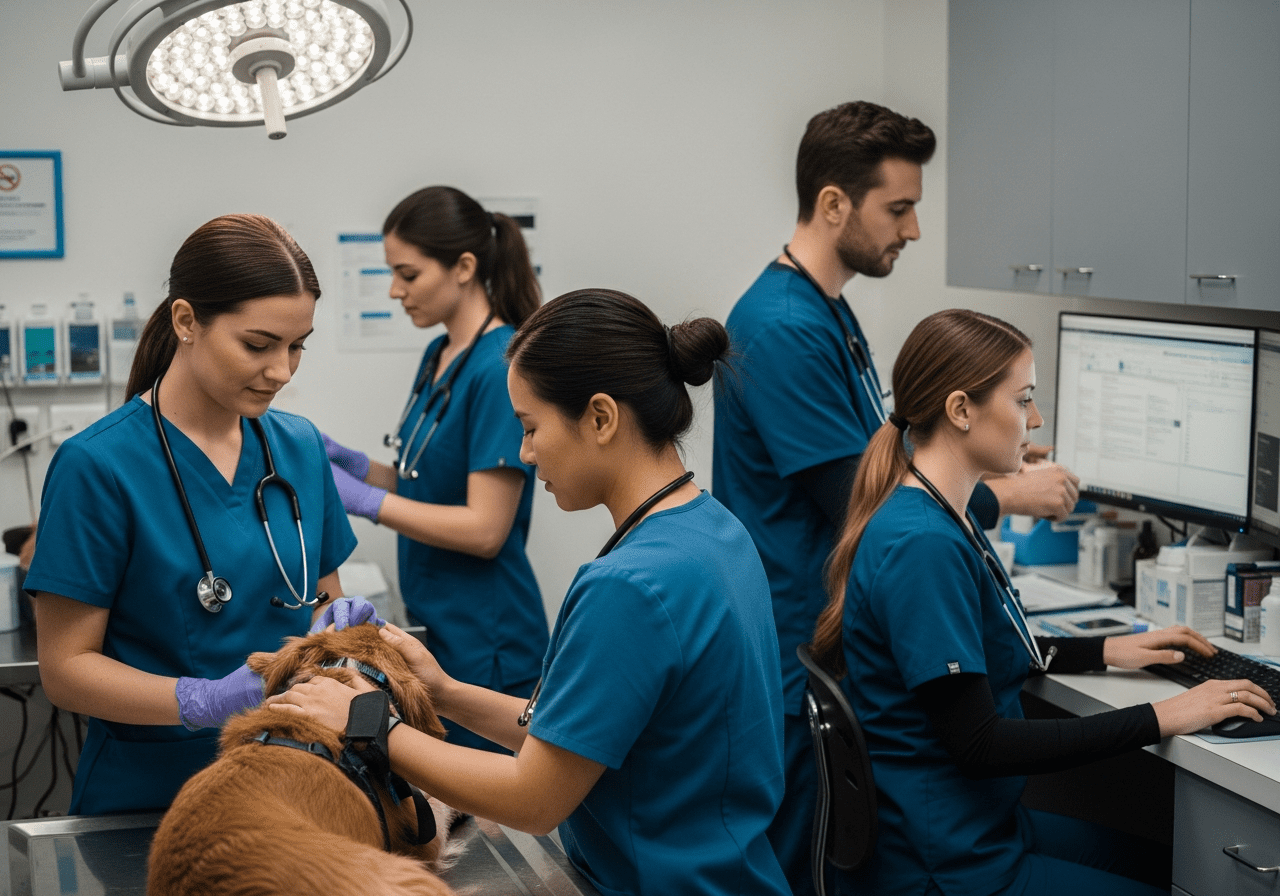
One in four newly graduated DVMs leaves their first employer within 18 months. With veterinary school debt averaging over $180,000 and starting salaries often below $90,000, new graduates enter the workforce financially stretched and clinically underprepared for the pace of independent practice. For clinic owners and practice managers, that early departure is not just an inconvenience — it costs an estimated $30,000–$50,000 per replacement hire when you factor in recruiting fees, onboarding time, and productivity loss.
If your clinic consistently struggles to retain new-grad hires past that 18-month mark, the problem is rarely the candidate. It is almost always the onboarding and support structure you provided — or didn’t.
What New DVMs Need From Employers in Year One
AVMA workforce survey data consistently shows five things new graduates prioritize in their first job:
- Structured mentorship from a senior DVM — not just a “feel free to ask questions” culture
- Clear expectations on appointment volume, case complexity, and quality standards from day one
- Transparent compensation — base salary, production structure, and how earnings scale over time
- Continuing education support — budget, time off, and a defined path for specialty credentialing
- A visible career ladder — what does progression to associate, senior DVM, or partnership look like?
Clinics that address all five retain new grads at significantly higher rates than those that address only compensation. The data is clear: pay matters, but structure matters more in year one.
Build a Structured 90-Day Onboarding Plan Before the New Hire Starts
Most clinic onboarding is reactive — “shadow me today, do this intake form, here’s the PIMS login.” That approach works for experienced hires. For new graduates, it creates anxiety and exposes the clinic to early errors.
A 90-day onboarding framework for new DVMs should be built before the hire arrives:
Weeks 1–2 (Orientation): No solo appointments. Shadow senior DVMs across all appointment types — wellness, acute, surgical prep. Review PIMS workflow, invoicing expectations, and client communication standards. Meet all staff by role. Understand the practice’s care philosophy and fee structure.
Weeks 3–6 (Supervised Practice): Begin handling wellness appointments solo with a senior DVM in the next room. Introduce acute cases with same-day case debrief. Begin learning the clinic’s most common surgical protocols. Weekly 1:1 with mentor to review cases and flag questions.
Weeks 7–12 (Progressive Autonomy): Full wellness and routine acute caseload. Introduction to more complex presentations with escalation pathway clear. Monthly group roundtable with all DVMs — case review, question forum, no-hierarchy discussion. First formal 90-day review: what’s working, what they need more of, comp trajectory check-in.
Print this plan. Give it to the new hire on offer acceptance. It signals that your clinic takes onboarding seriously — and it dramatically reduces first-week anxiety.
Assign a Mentor, Not Just a Supervisor
There is a difference between a supervisor who approves time-off requests and a mentor who debriefs a difficult euthanasia conversation on a Thursday afternoon. New DVMs need both, but the mentor relationship is what drives retention.
Best practices for pairing:
- Assign a mentor with 5+ years of clinical experience and demonstrated patience with teaching — not just your most senior DVM
- Carve out dedicated mentor time: 30 minutes minimum per week, protected on the schedule, not “catch them in the break room”
- Define the mentor’s scope: clinical questions, communication coaching, career planning — but not HR-level performance management
- Rotate monthly group roundtables so the new hire hears multiple clinical perspectives
If your practice is small and you are the only senior DVM, consider partnering with a neighboring clinic for peer mentorship, or connect with AVMA’s mentorship network to supplement in-house support.
Make Compensation Transparent From Day One
Compensation confusion is one of the leading causes of new-grad disillusionment. A new DVM who was told they’d earn “$80k base + production” and has no idea how production is calculated will feel deceived at the 6-month mark — even if nothing dishonest happened.
At offer stage, provide a written compensation document that explains:
- Base salary and how it was benchmarked (AVMA, AAHA, or regional data)
- Production percentage (industry standard is 18–23% of generated revenue) and exactly which services count
- How the first 90 days work — many clinics protect base during ramp-up without production component, which is appropriate and worth stating explicitly
- When and how compensation reviews happen — annually, at 18 months, at 3 years?
- Benefits value: health insurance, DEA registration reimbursement, malpractice/liability coverage, AVMA dues, state license renewal — itemize these, they represent $8,000–$15,000 in additional annual value most new grads don’t factor in
Clinics that hand over a written compensation breakdown at offer signing report significantly fewer early-departure conversations tied to “I didn’t understand how I’d be paid.”
Fund CE and Professional Development — and Say So Upfront
New DVMs graduate with broad training and limited depth in any one area. Specialty interest — whether in dermatology, oncology, emergency medicine, or shelter medicine — forms quickly in the first two years. Clinics that actively support that interest retain the employee; clinics that don’t, watch them leave for a practice that will.
A competitive CE and development package for a new-grad DVM includes:
- $1,500–$3,000 annual CE budget (AVMA benchmark for associate DVMs)
- 3–5 CE days per year, paid, separate from PTO
- Support for AVMA, state VMA, and specialty society memberships
- Willingness to adjust scheduling to accommodate multi-day conferences or residency interest
- A conversation about career goals at the 90-day review — not left until year two
If budget is a constraint, be honest about it. “We currently offer $1,500 and two CE days, and we’re working toward expanding that” is far better than making no mention of CE until the new hire asks — which signals to them that it isn’t a priority.
Define What Advancement Looks Like at Your Practice
The most frequent reason high-performing new DVMs cite for leaving a first employer is not compensation — it is the absence of a clear path forward. “I liked the clinic but had no idea what my future there looked like” appears repeatedly in exit interview data across veterinary practice groups.
You do not need a formal partnership track to address this. You need a conversation, documented:
- What does a second-year DVM role look like at your practice versus a first-year?
- Is there a path to senior associate, department lead, or medical director?
- Under what conditions would partnership or equity sharing be considered?
- Are there leadership opportunities (mentoring vet techs, inventory management, protocol development) available before clinical seniority is fully established?
None of this requires promising things you can’t deliver. It requires having the conversation — and then following through on the timeline you set.
Work With a Staffing Partner Who Briefs You on What Candidates Expect
Hiring a new-grad DVM without understanding what the current cohort’s expectations are is a mismatch waiting to happen. Compensation benchmarks, CE norms, and work-life expectations shift from graduating class to graduating class. A staffing partner who places DVMs regularly — and who debriefs both sides — can help your clinic calibrate before you post the role, not after you lose the hire.
Pulivarthi Group places new and early-career DVMs with veterinary practices designed to support them. We brief hiring managers on what current new-grad candidates prioritize in their first role, help build onboarding frameworks before the hire arrives, and match candidates to clinics where the culture and structure align with their stage of career. If you are building or rebuilding a new-grad onboarding program — or if you have lost two or more new grads in their first 18 months — connect with our veterinary staffing team before your next hire.
Sources
- AVMA Workforce Study: Veterinary Graduate Retention and First-Employment Data
- AVMA Economic Report on Veterinary Compensation Benchmarks
- AAHA Compensation and Benefits Survey for Veterinary Practices
- Bureau of Labor Statistics Occupational Outlook Handbook: Veterinarians
- NAVTA (National Association of Veterinary Technicians in America) Retention Research