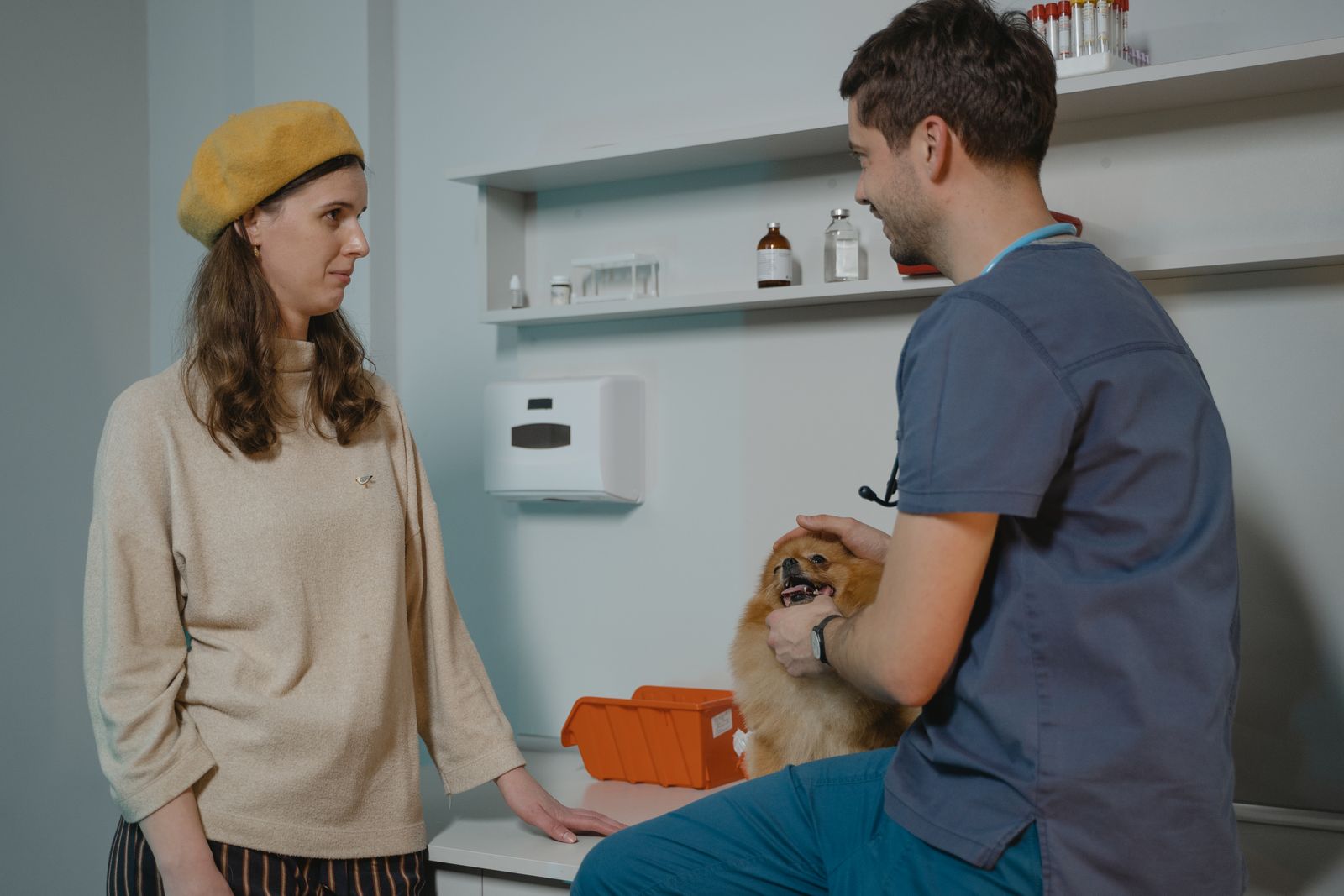
The most common way groups choose a veterinary medical director is also the least predictive. They promote the most senior clinician. It feels safe, and it honours tenure. However, it confuses two unrelated variables. Twenty years of excellent medicine predicts almost nothing about leading a medical team.
Some doctors have twelve years of experience and have led informally for ten of them. Others have twenty-five years and no appetite for developing people. Both make fine clinicians. Only one makes a veterinary medical director, and a title cannot convert the other.

Veterinary medical director: quick answers
What does a veterinary medical director do?
They own the standard of care across the hospital. They develop the doctors, arbitrate clinical disagreement, manage underperformance, and represent medicine in business decisions. The through-line is responsibility for other people’s practice, not excellence in their own.
How does the role differ from Chief of Staff or Lead DVM?
Mostly by organisation. Corporate groups use Chief of Staff for the equivalent salaried role. Lead DVM usually means a narrower remit: senior duties plus coordination, without full accountability for standards. Define the scope before the search starts.
Internal promotion or external hire?
Internal when a genuine leader already exists. External when the internal candidates are senior but not leadership-shaped, or when standards need resetting by someone without existing loyalties. The worst outcome is defaulting internal to avoid the assessment. That trades your best clinician for a struggling leader.
Scope comparison
| Role | Scope | Accountable for |
|---|---|---|
| Medical Director | One hospital, sometimes several | Standard of care, doctor development, clinical operations |
| Chief of Staff | One hospital | The equivalent remit inside a corporate structure |
| Area Chief of Staff | Multiple sites | The above at portfolio level, plus developing site leaders |
| Lead DVM | One team | Senior duties plus coordination |
The veterinary medical director question bank
Each question targets a capability that seniority does not reveal. Always ask for a named example, because leadership claims without incidents are aspiration, not evidence.
- “Tell me about disagreeing with another doctor’s clinical judgment.” This tests whether they can hold a standard against a peer. Listen for directness with respect.
- “Have you changed a protocol? What did it cost you politically?” This tests whether they can move an organisation. Candidates who understand the political price have actually made change.
- “Walk me through a junior doctor you developed.” Generic mentorship talk fails. A named doctor with deliberately built confidence passes.
- “A clinician you like is underperforming. What happens next, and when?” The fastest separator in the bank. Leaders describe an early, direct, kind conversation. Others describe waiting and documentation.
- “Do you want the title or the responsibility?” Asked plainly, this gets honest answers surprisingly often.
- “What would the doctors you led say about you?” Then ask those doctors. References from people they led outrank references from people they reported to.
The scoring rubric
Score each answer from one to three on three axes. Evidence: was there a real incident? Ownership: were they the actor or the narrator? Outcome: did anything durably change? A candidate below two on ownership is describing leadership they observed. That is the most common false positive, and seniority-based promotion never catches it.
Evaluate the veterinary medical director for retention
The previous article in this series made the case that this role is retention infrastructure. AAHA’s research found 30% of veterinary professionals planning to leave, and about half of those intend to leave clinical practice entirely. Therefore, the person who determines whether doctors stay is the most leveraged hire in the building.
That is the standard. Not “can they run the schedule?” but “will good doctors stay and grow under this person?” Every question above probes that.
More veterinary medical director questions
Should the strongest clinician ever get the role?
Only if they clear the leadership bar too. If they do not, say so honestly, and offer a genuine alternative: a clinical excellence track, specialisation support, or an ownership path.
How long should the search take?
Internal assessment takes weeks. External searches take months, because real clinical leaders are employed and not browsing job boards. Direct, confidential approach finds them.
What is the most common mistake?
Defining the role at the point of vacancy. Strong groups write the scope, the rubric, and the succession bench while the seat is still filled.
Sources
- AAHA — Stay, Please retention research, 2024
- Banfield Pet Hospital — Chief of Staff role descriptions
Hiring a veterinary medical director? Talk to a specialist veterinary recruiter. We screen for leadership evidence, not tenure, with a shortlist within a week. See our Veterinary Workforce Shortage Report.