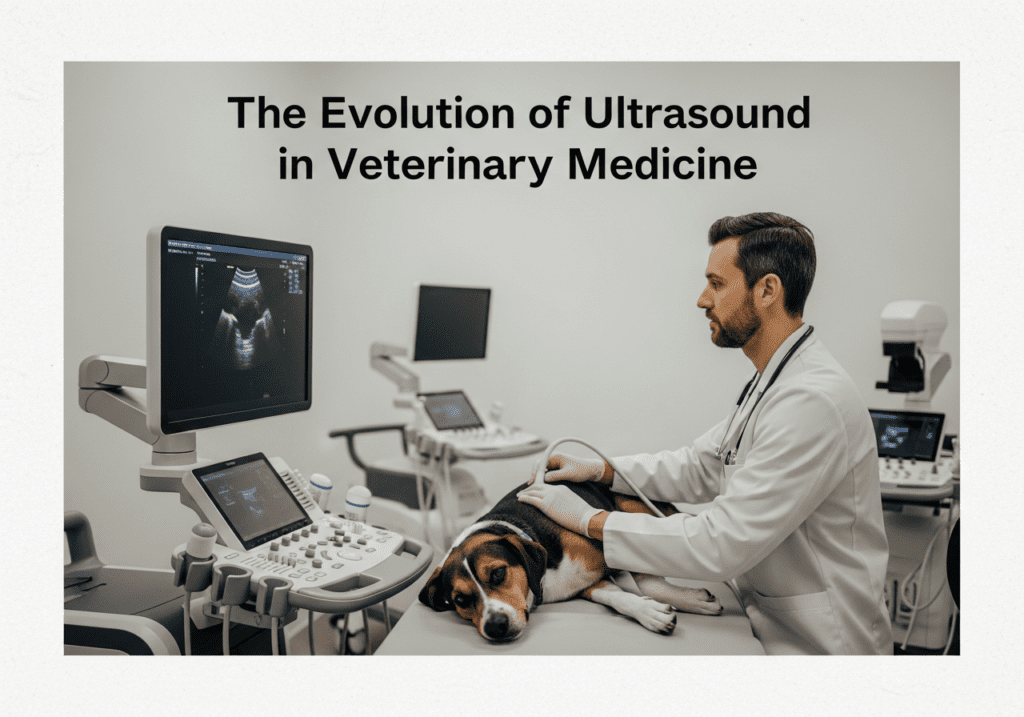
Ultrasound has become an essential diagnostic tool in veterinary medicine, evolving from experimental to indispensable for patient care. The integration of advanced diagnostic tools such as veterinary ultrasound has revolutionized clinical practice. It enables veterinarians to provide better patient outcomes while enhancing operational efficiency within clinics. This post will explore the evolution of ultrasound technology in veterinary clinics, its challenges, and its implications for various veterinary roles.
Advancements in Veterinary Ultrasound Technology
Over the years, veterinary ultrasound has seen significant advancements. Modern systems offer improved fidelity, portability, and user interface designs. Point-of-care ultrasound (POCUS) is now widely recognized as a crucial tool for immediate diagnostics. These advancements are particularly beneficial for General Practice Veterinarians. They can quickly assess patients right in their examination rooms, leading to faster decision-making.
Urgent Care and Emergency Veterinarians also benefit from these advancements. With POCUS, they can rapidly evaluate critical cases. This technology helps them identify problems like internal bleeding or fluid accumulations in real time, thus facilitating prompt and effective interventions.
Key Challenges in Implementation
Despite the benefits, integrating veterinary ultrasound into daily practice presents challenges. Operator dependence remains a notable concern. The accuracy of ultrasounds can significantly vary based on the user’s skill set. Therefore, adequate training is crucial. Clinics must invest time and resources in training their veterinarians and staff. This is particularly vital for those in specialized roles like Veterinary Internal Medicine Specialists, who rely heavily on ultrasound for complex diagnostics.
Furthermore, variability in technology also poses challenges. Different ultrasound devices may produce varying results, which can impact clinical decision-making. Therefore, establishing protocols within clinics can help standardize output and improve reliability across the board.
Practical Applications of Ultrasound in Clinics
Veterinary ultrasound finds applications across multiple facets of animal healthcare. In internal medicine, it serves as a non-invasive method to evaluate organ health. For Critical Care Veterinarians, ultrasound is vital for managing fluid therapy in critical patients. This ensures that they can make informed decisions quickly.
For Mixed Animal Veterinarians, ultrasound is invaluable for assessing both small and large animals. It aids in pregnancy diagnosis and reproductive health evaluations. Conversely, Shelter Veterinarians use ultrasound to assess the health of rescues swiftly. This allows timely medical interventions and improves adoptability rates.
Industry Trends Shaping the Future
As technology continues to evolve, the future of veterinary ultrasound appears promising. One trend is the increasing use of artificial intelligence (AI) to assist in image analysis. AI can help reduce operator dependence by providing accurate readings based on extensive data. This can markedly improve patient outcomes.
Moreover, the rise of mobile imaging solutions enables veterinarians to perform ultrasounds even in remote settings. Community Medicine Veterinarians can leverage this technology to extend veterinary care to underserved areas, which is critical for public health initiatives.
Conclusion
The evolution of ultrasound in veterinary medicine reflects significant advancements in technology that enhance diagnostics and patient care. However, veterinary clinics must address challenges related to training and technology variability to maximize the benefits. As a partner in the veterinary field, Pulivarthi Group recognizes the importance of skilled professionals in delivering quality care. We help veterinary clinics access hard-to-find talent, fostering growth and ensuring excellent patient outcomes across roles such as Associate Veterinarians, General Practice Veterinarians, and Veterinary Internal Medicine Specialists. Together, we can enhance the clinical practice landscape for all.