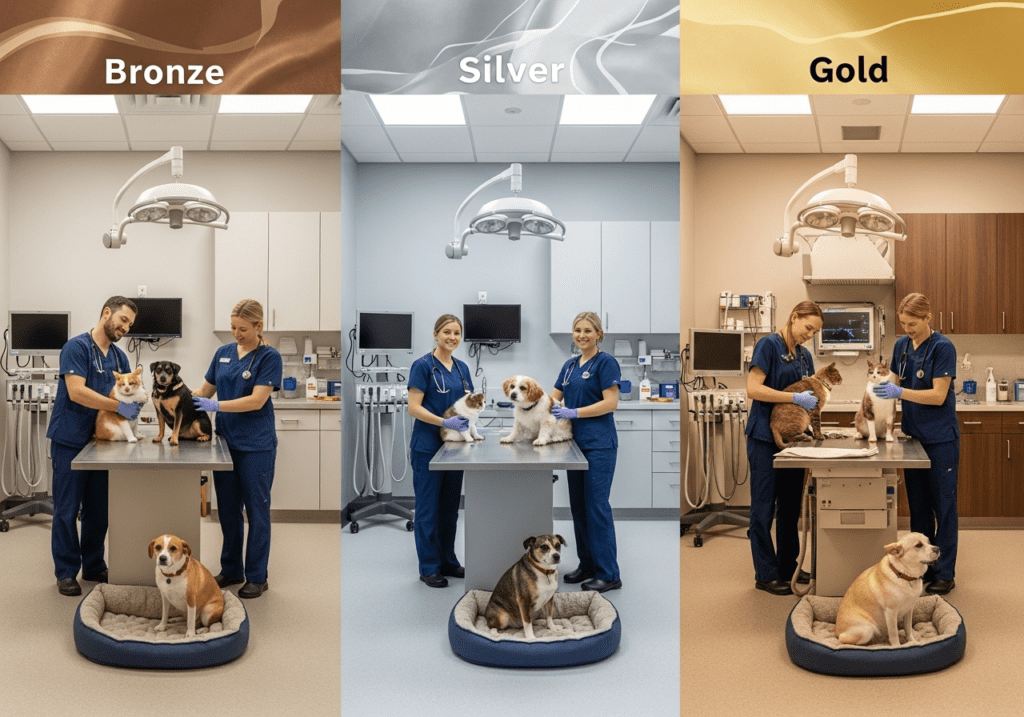
The topic of veterinary care standards is crucial for veterinary clinics across the United States. Every practice strives for high-quality veterinary care, but navigating varying standards can be challenging. Understanding these standards can enhance practice operations, improve patient outcomes, and elevate client satisfaction. In this article, we’ll explore the gold, silver, and bronze standards of veterinary care and their implications for clinical practices.
Understanding Veterinary Care Standards
Veterinary care standards serve as benchmarks for clinics, guiding the quality of service provided. The gold standard represents the highest level of care, while silver and bronze allow for broader interpretations. These standards directly impact various veterinary roles; for example, an Emergency Veterinarian operating under gold standards is expected to perform advanced interventions promptly. On the other hand, a Mixed Animal Veterinarian may apply silver standards while addressing diverse patient loads.
- Gold Standard: Comprehensive evaluation and treatment plans.
- Silver Standard: Effective yet not exhaustive care approaches.
- Bronze Standard: Minimal intervention meeting basic care needs.
Each level of standard not only defines patient care but sets the expectations clients have. Clients eager for optimal outcomes may seek practices that implement gold standards. For example, it is essential for clinics to deploy effective communication strategies, particularly when it comes to managing client expectations regarding treatment plans.
Navigating Client Expectations
Today’s clients are informed and expect their veterinary clinics to deliver care that meets or exceeds established standards. This expectation pressures practices to maintain high-quality veterinary care consistently. An Associate Veterinarian in a general practice must be adept at explaining treatment options and outcomes, bridging the gap between clinical standards and client expectations.
Moreover, practices often face challenges in balancing the demands of quality care against operational efficiency. Identifying weaknesses in these areas is critical. For instance, an Urgent Care Veterinarian may need to prioritize quick decision-making without compromising the standards of care.
Quality Improvement Strategies
To address these key challenges, clinics should implement ongoing training for staff, ensure proper resource allocation, and foster a culture of quality improvement. It is vital for all clinical staff, including Veterinary Internal Medicine Specialists, to stay current with new research and practices. By regularly participating in continuing education, veterinarians can integrate recent advancements into patient care protocols.
- Regular skill evaluation for all clinical personnel.
- Implementation of performance metrics to track progress.
- Open discussions about case studies among the clinical team.
By focusing on these strategies, a practice can continually align with the evolving standards of veterinary care, thus improving overall quality. Additionally, being proactive can mitigate potential legal or ethical issues that arise from inadequate standards of care.
Industry Trends in Veterinary Care
With the industry evolving rapidly, recognizing trends in veterinary care is equally important. Telemedicine, for example, has gained traction, providing an avenue for veterinarians, like Shelter Veterinarians, to broaden access to their services. Such innovations can streamline care processes, reduce wait times, and help clinics meet high standards of care without sacrificing efficiency.
Furthermore, understanding economic factors—such as the rising costs of care—can prompt practices to reconsider their value proposition. A blend of gold and silver standards may be suitable to meet diverse client needs while ensuring sustainable business operations.
Conclusion
High-quality veterinary care is foundational to the success of every veterinary clinic. By understanding and implementing the varying standards—gold, silver, and bronze—clinics can better navigate the complex landscape of patient care. Pulivarthi Group understands these dynamics and stands ready to support veterinary clinics in accessing the hard-to-find talent essential for meeting these standards. Our partnership helps you source skilled professionals across various roles, including General Practice Veterinarians, Board-Certified Veterinary Internal Medicine Specialists (DACVIM), Critical Care Veterinarians, and more. Together, we can enhance the quality of care and operational excellence in your practice.