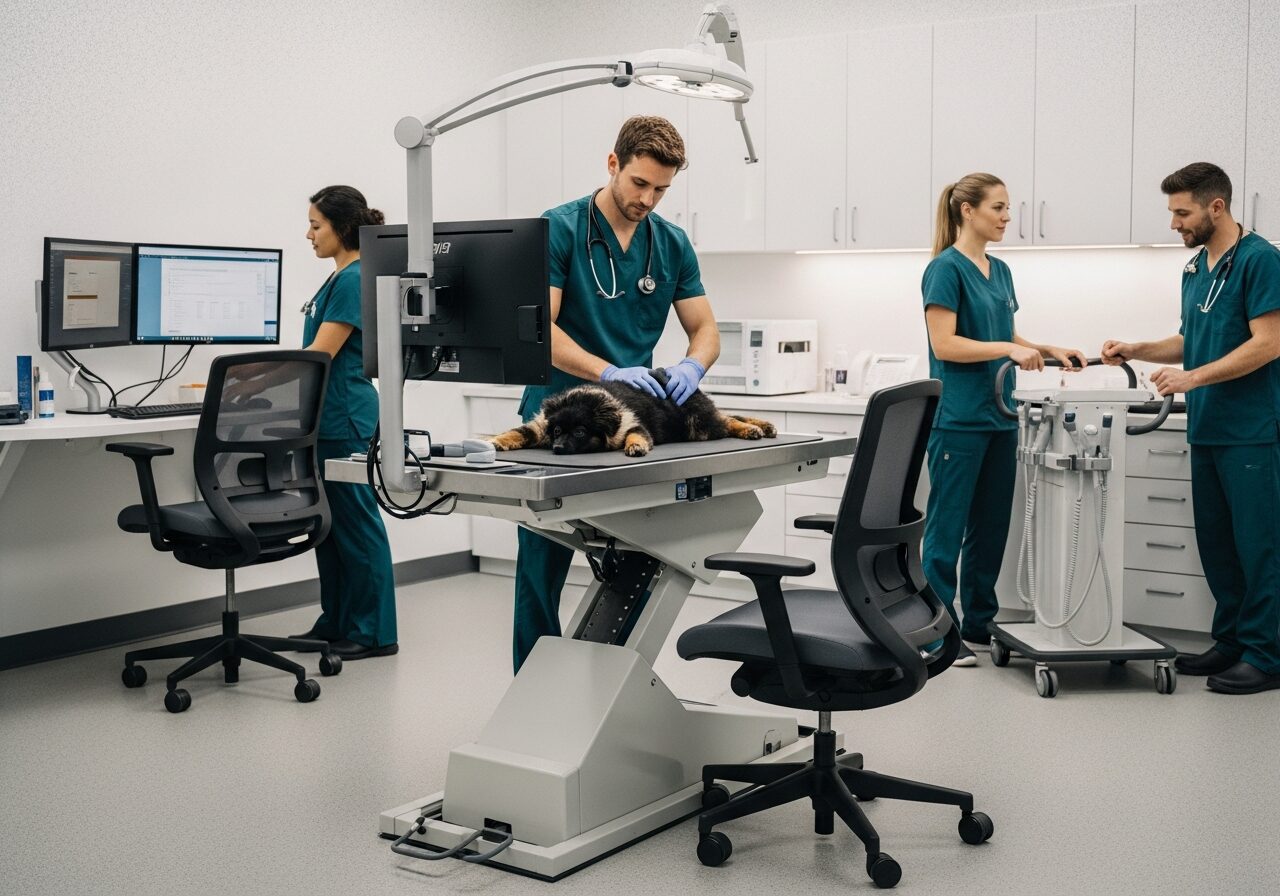
The foundation of trust in veterinary teams is the single most powerful predictor of team retention, clinical quality, and practice profitability. Practices where staff trust their leaders retain staff longer. They also deliver better client experiences and maintain stronger revenue per DVM hour. This guide gives practice owners a framework for building and maintaining that foundation of trust.
However, trust is not built through team-building events or pizza lunches. It is built through consistent leadership behavior over time. Specifically, transparency, accountability, and psychological safety are the three behaviors that build lasting trust. As a result, practices that invest in these leadership behaviors retain staff at measurably higher rates than those that rely on compensation alone.
Why the Foundation of Trust in Veterinary Teams Drives Business Outcomes
The connection between trust and retention is well-documented in organizational psychology. Specifically, staff who feel psychological safety — the sense that they can raise concerns without fear — are more engaged, more productive, and more likely to stay.
Furthermore, the Bureau of Labor Statistics projects 10% growth in veterinarian demand through 2034. Replacing a departing DVM costs $62,500 to $250,000. Consequently, practices that build the foundation of trust in their veterinary teams dramatically reduce these costs over time.
Additionally, trust between clinical staff members directly affects clinical quality. Teams where technicians trust that their concerns will be heard make fewer medication errors. They also escalate patient concerns faster. In other words, the foundation of trust in veterinary teams is not just a cultural aspiration — it is a clinical safety factor.
The Three Pillars of Trust in Veterinary Teams
Building the foundation of trust in veterinary teams requires consistent investment in three pillars: transparency, accountability, and psychological safety.
Transparency means sharing information that affects staff openly and proactively. Specifically, this includes compensation benchmarks, workload data, financial performance, and strategic decisions. Furthermore, transparency does not mean sharing everything. It means never allowing staff to be surprised by information they would reasonably expect to have.
Accountability means holding everyone — including leadership — to the same behavioral standards. For example, a practice manager who allows a senior DVM to violate scheduling protocols without consequence destroys team trust. This happens faster than almost any other single action.
Psychological safety means creating the conditions under which staff can raise concerns without fear. They must also be able to disagree with decisions and admit errors safely. Specifically, leaders build psychological safety by responding to concerns constructively — not defensively. Moreover, they model the vulnerability they want to see in their team.
How to Assess Trust in Your Veterinary Team
Measuring the foundation of trust in your veterinary team requires both qualitative and quantitative data. Specifically, track turnover rates by tenure. Staff who leave in their first 12 months often do so because trust was broken early. Furthermore, conduct anonymous staff surveys that ask directly about psychological safety and communication quality.
Additionally, track the ratio of concerns raised through formal channels versus informally. A high proportion of informal grievances suggests that staff do not trust formal processes. Consequently, you have a structural transparency problem that will continue to erode trust until addressed.
Leadership Behaviors That Build Trust
The foundation of trust in veterinary teams is built through specific, repeatable leadership behaviors. Moreover, these behaviors are learnable — they are not personality traits. For example, starting every team meeting by acknowledging one recent mistake builds psychological safety rapidly. Sharing what the leadership team learned from that mistake models the behavior staff need to do the same.
Additionally, follow-through on commitments matters more than any policy document. In short, staff do not trust words. They trust actions repeated over time. Leaders who do what they say they will do — consistently, even when inconvenient — build the foundation of trust faster than any other approach.
How Pulivarthi Group Supports Trust-Centered Veterinary Practices
Pulivarthi Group places veterinary professionals who are screened for communication styles and accountability behaviors that support trust-based team cultures. We assess leadership communication and conflict resolution approach as part of our candidate screening process.
Furthermore, we work with practice owners to understand your team culture before placing candidates. This ensures new hires reinforce your trust-building practices rather than disrupting them.
Ready to build a more trust-centered veterinary team? Contact Pulivarthi Group to discuss your staffing strategy today.