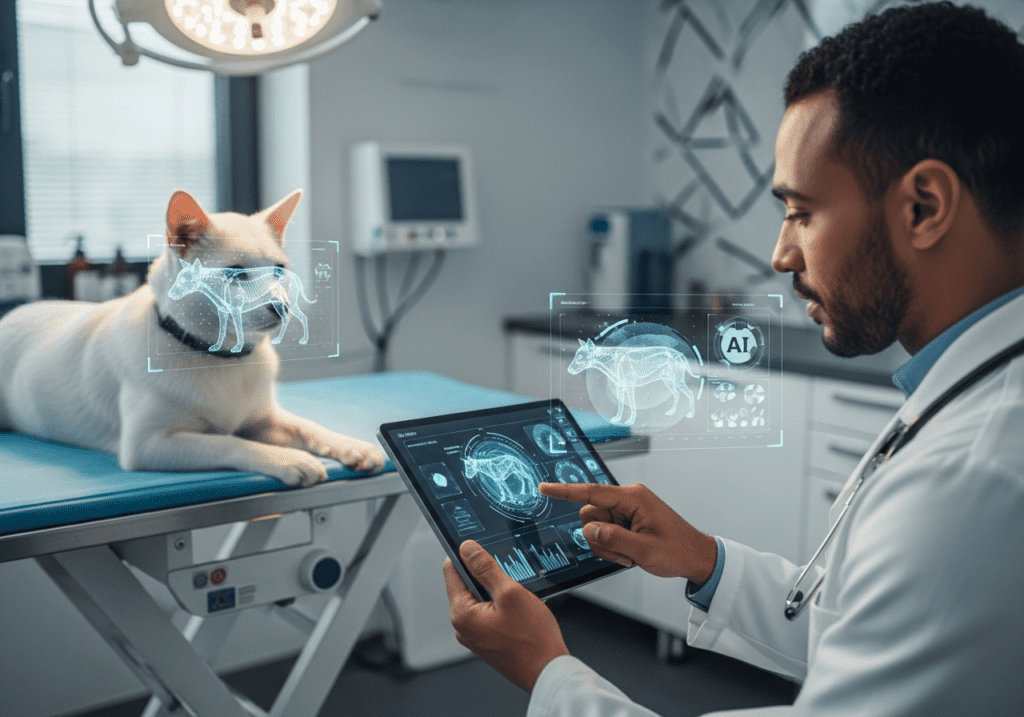
The benefits of AI in veterinary services are no longer theoretical. Clinics use artificial intelligence today to read radiographs faster, flag abnormal bloodwork, draft medical records, and predict no-shows. This guide walks through where AI genuinely helps veterinary teams, and where human judgment stays essential.
Transforming Veterinary Medicine with AI
The integration of AI in veterinary medicine is reshaping how veterinary clinics operate. As the industry faces increasing demands, veterinarians and clinical staff are seeking ways to enhance patient care while improving operational efficiency. AI technologies enable clinics to manage complex cases, streamline workflows, and create effective client education materials, thus propelling clinical practices into a new era of innovation.
Addressing Key Challenges in Veterinary Practice
Veterinary clinics encounter several key challenges, particularly when it comes to organizing complex cases and developing clinical protocols. For example, general practice veterinarians often deal with a diverse range of cases. Artificial intelligence can support these clinicians by analyzing patient data and suggesting tailored treatment options based on existing medical literature.
Similarly, urgent care and emergency veterinarians face immediate challenges when diagnosing and treating patients under pressure. AI-powered diagnostic tools assist them in quickly identifying underlying issues, thus improving triage processes and patient outcomes. Moreover, practice owners can utilize AI to enhance operational efficiency, resulting in reduced wait times and improved client satisfaction.
Enhancing Client Education through AI
Another critical area where AI in veterinary medicine can make a significant impact is client education. With the use of AI, veterinary clinics can generate customized educational materials that align with individual client needs. For instance, shelter veterinarians often handle high volumes of cases and varied animal populations. Implementing AI solutions can help create tailored educational content for adopters, ensuring they understand the specific needs of their new pets.
Furthermore, community medicine veterinarians can benefit from AI-driven platforms that facilitate outreach efforts. By automating the creation of informative content, practices can engage more effectively with clients, fostering a stronger community connection.
The Future of Veterinary Roles in the AI Era
The rise of AI in veterinary medicine not only brings operational advantages but also shifts the landscape of workforce realities within veterinary clinics. Specialty roles such as veterinary internal medicine specialists and board-certified veterinary internal medicine specialists (DACVIM) can utilize AI to refine their diagnostic processes. By leveraging AI tools for case review and data interpretation, specialists can focus on complex problem-solving and decision-making.
Moreover, mixed animal and food animal veterinarians can use AI to improve their fieldwork efficiency. For example, AI can assist in real-time data collection from mobile devices, allowing veterinarians to replicate successful treatment protocols quickly across different scenarios. This level of adaptable technology is becoming essential in a fast-evolving industry.
Implications for Veterinary Practice Owners
For practice owners, adapting to AI technologies presents both opportunities and challenges. Implementing these tools requires an investment in training and infrastructure. However, the long-term benefits of improving patient care and operational efficiencies can result in a more profitable practice.
- Identify processes that can be automated through AI.
- Invest in training clinical staff on AI applications.
- Leverage data analytics to inform business decisions.
Frequently Asked Questions
What are the main benefits of AI in veterinary services?
Faster diagnostics support, less documentation time, smarter scheduling, and earlier disease detection. Together they return hours to clinical care each week.
Will AI replace veterinary staff?
No. AI removes repetitive work, but diagnosis, client communication, and hands-on care remain human. In fact, clinics that adopt AI still need skilled teams, and many pair technology upgrades with a specialized veterinary staffing partner to run them well.
Where should a clinic start with AI?
Start with one measurable workflow: AI-assisted radiology review or auto-drafted SOAP notes. Additionally, the AVMA’s AI resources cover adoption and ethics questions. Measured rollout, one workflow at a time, is how clinics capture the benefits of AI in veterinary services without disrupting care.
Conclusion
AI in veterinary medicine offers transformative potential for clinics, improving patient care and enhancing client interaction. As the veterinary field continues to evolve, embracing these technologies is crucial to maintaining a competitive edge. At Pulivarthi Group, we recognize the importance of building strong clinical teams equipped to leverage these innovations. Our mission is to connect veterinary clinics with skilled professionals across all roles, including associate veterinarians, emergency veterinarians, and veterinary internal medicine specialists. Together, we can ensure the future of veterinary care remains bright and prepared for the challenges ahead.