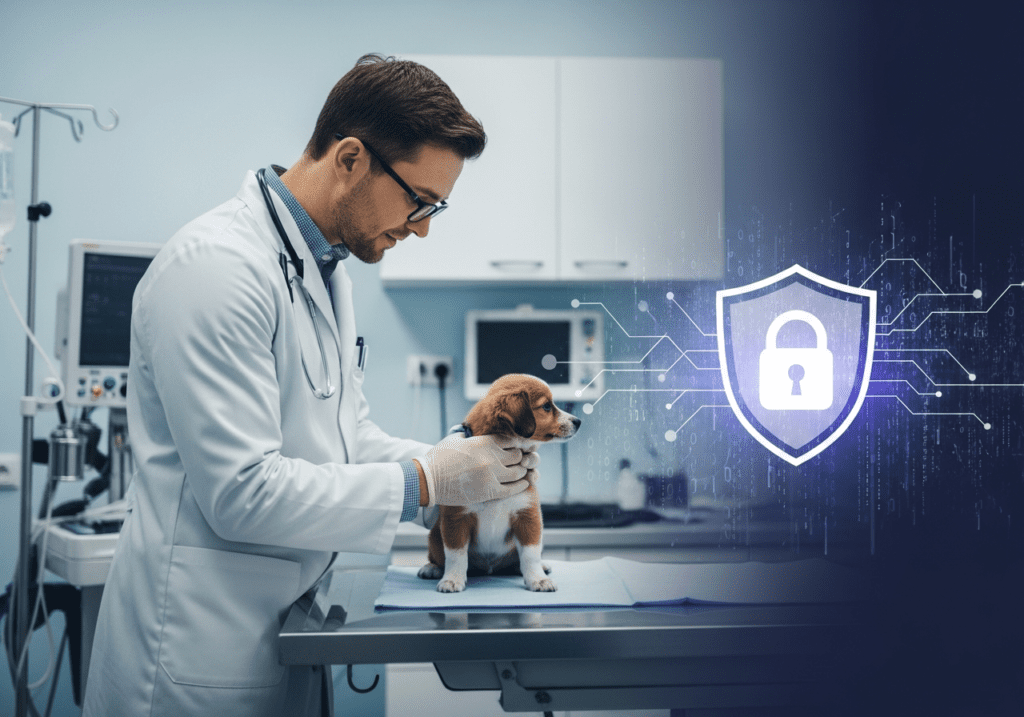
Cybersecurity for veterinary practices is no longer optional. Clinics hold client payment data, medical records, and controlled-substance logs, which makes veterinary offices attractive targets for ransomware and phishing. This guide covers the practical protections every practice needs, whether you run a single clinic or a group of veterinary surgeries.
As veterinary clinics increasingly depend on digital tools, cybersecurity stands as a critical concern. Protecting client data has gained urgency, given the rising number of cyber threats. These challenges impact not only the clinic’s reputation but also the trust clients place in veterinary care. As a result, understanding how to enhance cybersecurity in your animal practice is vital.
Understanding the Cybersecurity Landscape
Currently, veterinary practices face various cyber threats, such as ransomware attacks and data breaches. These incidents pose risks to sensitive client information, including pet medical records. For veterinarians and clinic staff, the reality of these threats means that securing data should be a top priority. From general practice veterinarians to emergency veterinarians, all veterinary roles must understand these risks to protect their practices.
The Importance of Compliance
Compliance with regulations such as the Health Insurance Portability and Accountability Act (HIPAA) is essential for veterinary clinics. These guidelines dictate how health information should be handled. Understanding these regulations helps ensure that veterinary professionals, especially those in urgent care or critical care settings, are aware of the standards that govern patient information. Non-compliance can lead to severe consequences, including fines and reputational damage.
Building a Culture of Cyber Safety
Fostering a culture of cybersecurity within your practice involves continuous education. Staff training is vital for mitigating risks. Everyone, from practice managers to veterinary technicians, must understand basic cybersecurity practices. For instance:
- Regularly update software and systems to protect against vulnerabilities.
- Use strong passwords and change them regularly.
- Implement two-factor authentication where possible.
In addition, holding staff meetings focused on cybersecurity can engage your team. This approach ensures they are informed about the evolving cyber landscape, thus enhancing operational efficiency.
Practical Steps to Enhance Cybersecurity for Veterinary Practices
Veterinary clinics can adopt several best practices to improve security:
- Conduct regular cybersecurity assessments to identify vulnerabilities.
- Establish protocols for data handling and sharing.
- Utilize secure networks and encrypted communication.
For urgent care veterinarians, quick decision-making can exacerbate risks when stressed. Therefore, having clear cybersecurity protocols can streamline processes, ensuring data safety while providing urgent care.
Frequently Asked Questions
Why does cybersecurity for veterinary offices matter?
Because clinics store payment details, client PII, and DEA-regulated drug records. A breach halts operations, and downtime costs compound daily until systems are restored.
What are the first steps for cyber security in veterinary surgeries?
Multi-factor authentication on email and practice software, automatic offsite backups, staff phishing training, and prompt software updates. The FTC small business cybersecurity guide offers free checklists.
Who should own cybersecurity in a clinic?
Name one accountable owner, usually the practice manager, and give every hire security basics during onboarding. Stable staffing helps here too; high turnover multiplies risky access accounts, which is one more reason to keep your veterinary team fully staffed. Treat cybersecurity for veterinary practices like infection control: routine, trained, and audited.
Conclusion
In conclusion, enhancing cybersecurity in veterinary practices is not merely a technical requirement; it’s a commitment to patient care. By incorporating effective cybersecurity strategies, your practice not only protects client data but also builds a robust operational framework. The Pulivarthi Group stands ready to assist veterinary clinics in accessing exceptional talent to deepen your practice’s competencies. This enables you to secure the right expertise in areas ranging from general practice veterinarians to board-certified specialists such as DACVIM, ensuring your clinic remains resilient in the face of current and future cybersecurity challenges.