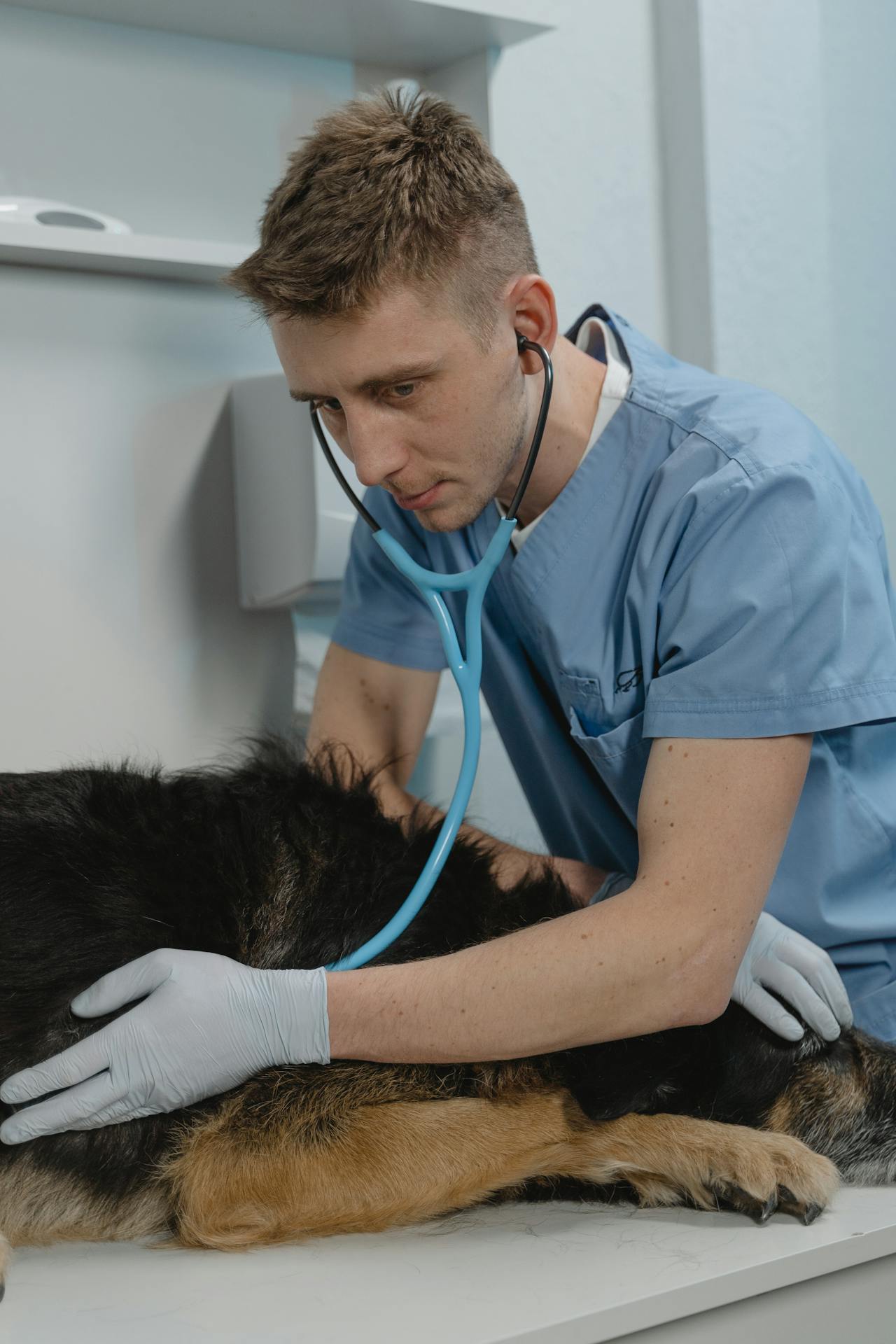
A Specialty Referral Hospital Operating Under ICU-Level Oversight
Specialty veterinary hospitals operate under heightened clinical scrutiny. This case study examines a regional referral center providing 24/7 intensive care services, advanced diagnostics, and post-surgical monitoring. Because the hospital functioned as a tertiary referral destination, case acuity remained consistently high.
Critical care units within veterinary medicine demand precision. Ventilator management, vasopressor titration, and complex post-operative monitoring require specialized oversight. According to the American Veterinary Medical Association, specialty and emergency services face the most restrictive credentialing requirements across veterinary disciplines.
Operationally, the hospital maintained strict ICU compliance standards. Credentialed specialists supervised all advanced cases. Meanwhile, regulatory documentation governed every clinical decision. Therefore, staffing gaps carried immediate patient safety implications.
Under normal conditions, the model supported high-quality outcomes. However, even a temporary absence of credentialed critical care oversight threatened ICU throughput and referral acceptance.
Problem: Advanced Credentialing Delayed Critical Care Veterinarian Deployment
The challenge surfaced following an unexpected specialist departure. One board-eligible critical care veterinarian exited due to relocation. Although leadership initiated replacement planning early, credentialing complexity quickly slowed progress.
Unlike generalist roles, critical care placements require multilayered approvals. Board eligibility verification, residency documentation, and specialty hospital privileging occurred sequentially. As a result, onboarding timelines expanded rapidly.
According to the American Association of Veterinary State Boards, specialty veterinary licensing and privileging frequently exceed standard licensure timelines by several months. Consequently, ICU scheduling flexibility diminished.
As coverage tightened, the hospital limited intake of the most complex cases. Referral partners experienced delays. Meanwhile, existing specialists absorbed additional ICU oversight responsibilities.
Without accelerated compliance resolution, leadership risked compromising both patient outcomes and institutional credibility.
Constraints: Specialty Licensing, ICU Compliance, and Zero Margin for Error
Several constraints shaped the response. Specialty credentialing permitted no shortcuts. Documentation gaps triggered immediate delays. Therefore, accuracy mattered as much as speed.
Additionally, ICU compliance standards required hospital-specific privileging. Credentialing committees reviewed case logs, procedural volumes, and continuing education records. Each review followed fixed schedules.
Internal HR teams lacked dedicated specialty credentialing expertise. Because routine hiring workflows focused on general roles, escalation occurred slowly. Meanwhile, compliance exposure increased.
Market conditions further intensified pressure. According to workforce analysis published by the National Institutes of Health, critical care veterinarians represent one of the smallest subspecialty labor pools in animal healthcare.
Traditional recruitment cycles failed to align with ICU operational risk. Therefore, leadership required a compliance-first staffing intervention.
Solution: Compliance-Centered Specialist Credentialing Strategy
The hospital adopted a credentialing-driven placement model. Rather than treating approvals as administrative follow-up, compliance became the central execution path.
Specialty documentation collection began immediately. Board eligibility records, residency confirmations, and procedural logs compiled concurrently. Because parallel execution replaced sequential processing, timelines compressed.
Hospital privileging requirements received early attention. Credentialing packets aligned precisely with committee expectations. As a result, review cycles progressed without revision requests.
Additionally, malpractice coverage and ICU protocol alignment occurred simultaneously. Clinical governance teams remained involved throughout the process. Therefore, oversight stayed intact.
According to healthcare credentialing research from Deloitte, parallel credentialing models reduce approval delays by up to 45 percent in specialty care environments. This approach guided execution.
How Pulivarthi Group Intervened
Pulivarthi Group supported the organization during a high-risk compliance window by executing a role-specific staffing intervention designed for regulatory accuracy and operational continuity.
Rather than approaching the placement as a standard specialist hire, Pulivarthi Group aligned the staffing process to ICU governance requirements. Candidate evaluation prioritized documented critical care experience, board eligibility status, and hospital privileging readiness.
Throughout the engagement, Pulivarthi Group coordinated credentialing workflows across licensing bodies, specialty boards, and hospital committees. As a result, approval sequencing remained controlled despite external regulatory dependencies.
Outcome: Credentialing Timelines Reduced and ICU Capacity Restored
The results proved measurable. Full credentialing completed in 42 days. Historical timelines exceeded 120 days. Therefore, ICU oversight stabilized more than two months earlier than projected.
Referral acceptance resumed immediately. High-acuity transfers increased. Meanwhile, ICU census normalized without overburdening existing specialists.
Compliance audits passed without exception. Documentation completeness reached 100 percent. As a result, governance confidence improved.
Financial impact followed operational recovery. According to benchmarks from Veterinary Practice News, delayed specialty staffing can reduce referral hospital revenue by six figures annually. This outcome prevented prolonged loss.
Most importantly, patient outcomes improved. Stabilization timelines shortened. Complication rates declined. Consequently, referral partner trust strengthened.
Why Compliance Bottlenecks Hit Critical Care Roles Hardest
This case highlights a structural reality. Critical care veterinary medicine operates under layered regulatory oversight. Because risk tolerance remains low, credentialing friction multiplies impact.
According to specialty workforce studies published by McKinsey & Company, organizations that embed compliance into staffing execution experience fewer ICU disruptions.
By treating credentialing as a strategic function, the hospital converted uncertainty into predictable timelines. Therefore, staffing decisions aligned with patient acuity rather than administrative delay.
Conclusion: Compliance-First Staffing Protects ICU Integrity
Critical care environments allow no margin for credentialing error. Delays compromise outcomes quickly. Therefore, compliance speed defines operational resilience.
This case demonstrates that structured, compliance-centered staffing restores critical care capacity without sacrificing oversight.
When organizations align staffing execution with regulatory reality, ICU stability follows. In specialty medicine, that alignment safeguards both patients and reputation.
Applying This Staffing Model
Organizations operating ICU-level services often encounter similar compliance friction. Specialty credentialing delays compound operational risk.
This staffing model applies to roles where regulatory accuracy, approval sequencing, and readiness determine service continuity.
Reviewing credentialing timelines and privileging requirements early allows organizations to plan proactively rather than react under pressure.