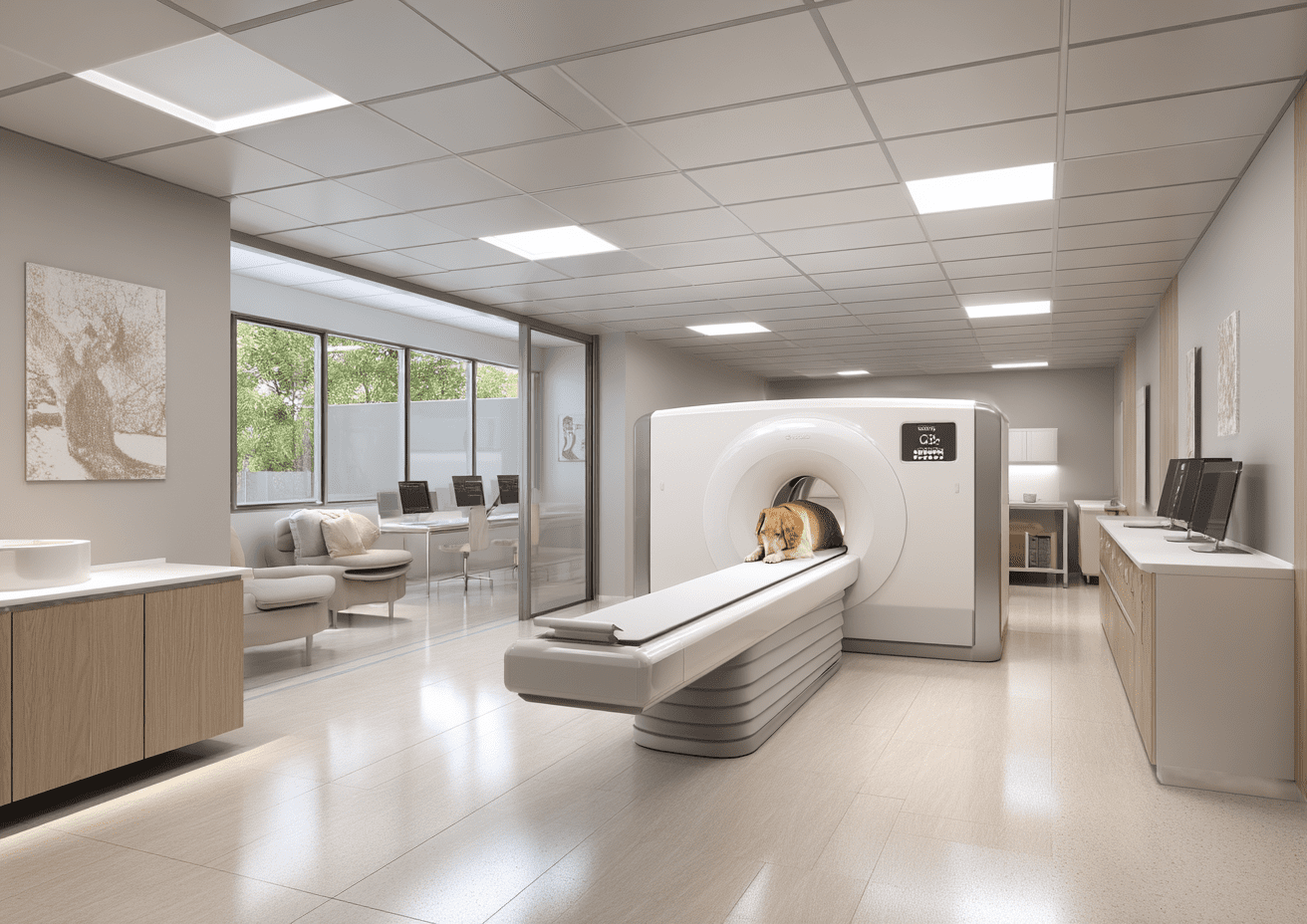
A Critical Care Veterinarian, often called a veterinary criticalist, is a veterinarian trained to manage the sickest, most unstable patients in a hospital setting, typically within an intensive care unit (ICU). Criticalists deliver continuous, high-acuity care that goes beyond initial stabilization. They oversee advanced monitoring, mechanical ventilation, complex shock and sepsis protocols, post-operative deterioration, transfusion medicine, and multi-organ failure management. Many criticalists are board-certified in emergency and critical care and use the credential DACVECC.
Table of contents
- What veterinary critical care is
- Critical care specialist vs emergency veterinarian
- When a critical care veterinarian is needed
- What a critical care veterinarian does day-to-day
- Inside the veterinary ICU
- Core ICU capabilities that define the role
- Common ICU case mix
- High-impact procedures and interventions
- Staffing models and scheduling patterns
- Operational metrics that matter in critical care
- ER-to-ICU handoffs, referrals, and continuity
- Education, residency, and DACVECC board certification
- Workforce reality: demand drivers, burnout risks, retention levers
- FAQs
What veterinary critical care is
Veterinary critical care is the discipline focused on life-threatening illness or injury that requires continuous monitoring and rapid intervention. Unlike routine hospitalization, ICU care assumes that the patient can deteriorate quickly, and therefore clinical decisions must be made with incomplete information, under time pressure, and with frequent reassessment.
Critical care is often described as the “medicine of minutes and hours,” not days and weeks. The ICU team continuously monitors physiologic variables, anticipates complications, and adjusts treatment plans in real time to prevent organ failure, cardiac arrest, respiratory collapse, uncontrolled bleeding, or irreversible shock states.
Critical care specialist vs emergency veterinarian
Emergency medicine and critical care overlap clinically, but they differ in how care is structured and where most time is spent.
| Dimension | Emergency veterinarian (ER) | Critical care veterinarian (ICU criticalist) |
|---|---|---|
| Primary purpose | Rapid triage, stabilization, immediate life-saving interventions | Ongoing management of unstable patients needing constant monitoring and advanced support |
| Time horizon | Minutes to hours (stabilize and decide next step) | Hours to days (prevent deterioration, support recovery, manage complications) |
| Typical patient flow | High-volume intake, variable acuity, discharge or admit decisions | Lower volume, consistently high acuity, prolonged hospitalization |
| Common setting | Emergency department treatment area | ICU suite with advanced monitoring and life support |
| Clinical focus | Initial diagnostics, stabilization protocols, emergency procedures | Ventilation, sepsis and shock management, transfusions, complex electrolyte and acid-base correction, multi-organ support |
| Specialization | May be GP-trained with ER experience; may also be residency-trained | Often residency-trained and board-certified (DACVECC) in emergency and critical care |
Practical takeaway: in many hospitals, the ER clinician gets the patient “off the cliff,” while the criticalist keeps the patient from falling again.
When a critical care veterinarian is needed
A critical care veterinarian is most often involved when the patient requires advanced support beyond standard hospitalization. This includes cases where the risk is not just that the pet is sick, but that the pet can decline rapidly without continuous ICU-level monitoring.
Common triggers for ICU admission
- Respiratory compromise needing oxygen escalation, advanced monitoring, or ventilation support
- Shock states that require vasopressors or advanced fluid strategies
- Sepsis or suspected sepsis with organ dysfunction
- Major trauma with hemorrhage risk or unstable vitals
- Severe toxin exposure requiring intensive supportive care, transfusions, or dialysis capability
- Acute kidney injury, heart failure, or multi-organ failure
- Post-operative instability, especially after high-risk surgery or anesthetic complications
- Neurologic crisis with airway risk or profound instability
What a critical care veterinarian does day-to-day
1) Continuous reassessment and treatment plan iteration
ICU medicine is not “set the plan and wait.” Criticalists reassess patients repeatedly, interpret real-time trend data, and adjust medications, fluids, oxygen delivery, and nursing protocols as physiology changes.
2) Complex physiology management
- Electrolyte and acid-base derangements
- Perfusion support and shock resuscitation
- Arrhythmia recognition and stabilization
- Ventilation and oxygenation strategy selection
- Coagulation and hemorrhage control decision-making
3) High-stakes collaboration
Criticalists practice collaborative medicine across multiple specialties. A single ICU patient may require coordination with surgery, internal medicine, cardiology, neurology, oncology, radiology, and anesthesia, often within the same day.
4) Family communication in evolving situations
In critical care, the most difficult part is often not the medicine. It is helping families understand uncertainty. Criticalists must set expectations, explain risk clearly, present realistic pathways, and support decision-making when outcomes are unpredictable and costs can shift quickly as the case evolves.
Inside the veterinary ICU
A veterinary ICU is designed for patients who need rapid escalation of support and constant observation. While ICU design varies by hospital, most include specialized monitoring, oxygen delivery infrastructure, infusion therapy capability, and staffing workflows built around frequent reassessment.
Typical ICU features
- Dedicated ICU treatment space or suite with high visibility
- Oxygen delivery systems (including oxygen cages and advanced nasal oxygen delivery in some facilities)
- Multiparameter monitoring (ECG, blood pressure, SpO2, temperature trends)
- Infusion pumps and syringe drivers for continuous medications
- Fast-turn lab workflows and rapid imaging access
- Protocols for CPR, post-arrest care, and stabilization bundles
Core ICU capabilities that define the role
Critical care veterinarians are most effective when ICU capability matches patient acuity. The following capability categories shape what the ICU can handle in-house versus what requires referral or transfer.
| Capability category | Examples | Why it matters |
|---|---|---|
| Respiratory support | Oxygen cages, high-flow oxygen delivery, ventilator readiness in advanced ICUs | Respiratory collapse risk is time-sensitive and requires escalation pathways |
| Hemodynamic support | Advanced fluids, vasopressors, blood pressure monitoring | Shock and perfusion failure drive mortality in high-acuity patients |
| Transfusion medicine | Blood products, plasma, crossmatching workflows | Hemorrhage, anemia, clotting disorders, and trauma depend on access and speed |
| Renal and toxin support | Dialysis or blood purification capability in advanced centers | Some toxicities and kidney failures require specialized rescue therapy |
| Advanced monitoring and nursing | Continuous vitals trending, catheter and tube management, ICU-trained technicians | Critical care fails without skilled nursing depth and monitoring discipline |
Common ICU case mix
ICU case mix tends to cluster around conditions that combine high physiologic instability with unpredictable trajectories.
High-frequency critical care presentations
- Sepsis and systemic inflammatory states
- Respiratory distress and oxygenation failure
- Major trauma and shock
- Acute kidney injury and severe dehydration with collapse
- Congestive heart failure exacerbations
- Toxin exposure with neurologic or organ impact
- Post-operative complications and anesthetic recovery instability
- Severe endocrine crises such as diabetic emergencies
- Coagulopathies and severe bleeding disorders
High-impact procedures and interventions
Critical care is procedure-heavy, but procedures are rarely “the point.” The point is physiologic stabilization and preventing secondary injury.
Common ICU interventions
- Central and long-line catheterization for reliable access and complex therapy
- Advanced fluid therapy and shock resuscitation planning
- Blood and plasma transfusions with monitoring for response and complications
- Chest tube placement and management for pleural space disease
- Feeding tube planning and nutritional support in prolonged illness
- Urinary catheter placement and output measurement for renal monitoring
- Mechanical ventilation coordination in advanced ICUs
- CPR leadership and post-arrest stabilization protocols
Staffing models and scheduling patterns
ICU staffing succeeds or fails on coverage depth. A criticalist is not effective without ICU-trained technical teams and operational design that supports continuous reassessment.
Common staffing patterns
- Criticalist coverage during peak ICU hours, with structured handoff to overnight ER leadership in some models
- ICU-dedicated technicians with advanced competencies in monitoring, infusion therapy, and tube management
- High-frequency rounding cadence, including formal reassessment blocks
- Defined escalation pathways for sudden decompensation
Scheduling realities
- ICU work often includes after-hours decision-making even when the criticalist is not physically onsite
- Many hospitals design coverage to minimize “single point of failure” decision-making during overnight shifts
- Retention improves when schedules protect recovery time and reduce chronic sleep disruption
Operational metrics that matter in critical care
Because ICU care is resource-intensive, high-performing programs track metrics that connect clinical outcomes to workflow discipline.
- Time-to-escalation for oxygen and perfusion support
- Frequency and quality of reassessment documentation
- Transfusion response metrics and complication monitoring
- Ventilation initiation criteria compliance in centers with ventilators
- Shock bundle consistency in septic and trauma patients
- ICU length-of-stay stratified by condition type
- Readmission or bounce-back rates after ICU discharge
- Client update cadence compliance and satisfaction in high-stress cases
ER-to-ICU handoffs, referrals, and continuity
Critical care outcomes often improve or worsen at handoff points. The ER-to-ICU transition must be structured, because errors here tend to be high-impact.
What a strong handoff includes
- Clear problem list and the leading differential diagnoses
- Stabilization steps already completed and response trends
- Pending diagnostics and what decisions they are meant to inform
- Medication infusions and monitoring priorities
- Risk flags, including hemorrhage risk, airway risk, arrhythmia risk, and sepsis risk
- Owner consent status and decision boundaries
- Primary care or referring DVM communication plan
Continuity beyond the ICU
- Discharge planning that anticipates complications and compliance barriers
- Written summaries to primary care veterinarians and specialists
- Clear recheck timing and “return immediately” instructions
Education, residency, and DACVECC board certification
Many critical care veterinarians are board-certified in emergency and critical care. The most recognized credential for criticalists in the U.S. is DACVECC, which indicates completion of advanced specialty training and successful board certification through the specialty college.
Typical pathway to becoming a criticalist
- Earn a Doctor of Veterinary Medicine (DVM) degree and complete licensing requirements
- Complete a rotating internship (common step for specialty readiness)
- Complete a multi-year residency in emergency and critical care
- Meet scholarly and case log requirements as applicable
- Pass the board certification examination to earn DACVECC status
Not every ICU is staffed by a DACVECC criticalist, and some hospitals use experienced ER veterinarians for ICU oversight. However, ICU scope expands substantially when board-certified criticalists are available for consultation and leadership.
Workforce reality: demand drivers, burnout risks, retention levers
Why demand remains high
- Growing availability of specialty care increases ICU admissions and post-op monitoring complexity
- Pet longevity increases chronic disease complexity and acute decompensation events
- ER volume growth creates more cases that require ICU transfer rather than discharge
- Advanced interventions such as transfusion medicine and ventilation increase ICU utilization
Burnout drivers specific to critical care
- Continuous high-stakes decision-making with limited margin for error
- Emotional intensity and prolonged cases with uncertain outcomes
- Frequent “competing priorities” between multiple unstable patients
- Complex client communication under crisis and financial uncertainty
Retention levers that typically work
- ICU-trained technician depth and clear competency ladders
- Protected rounding time and structured reassessment workflows
- Scheduling that reduces chronic sleep disruption and supports recovery
- Protocols that reduce cognitive overload while preserving clinician judgment
- Culture design that supports debriefing after difficult cases
FAQs
What is a veterinary criticalist?
A veterinary criticalist is a veterinarian who focuses on ICU-level management of critically ill or injured animals, often with advanced training and board certification in emergency and critical care.
What is DACVECC?
DACVECC is a credential used by veterinarians who are board-certified diplomates in emergency and critical care. It signifies extensive training beyond the DVM and successful completion of specialty certification requirements.
How is critical care different from emergency care?
Emergency care is primarily about rapid triage and stabilization. Critical care is ongoing ICU management of unstable patients, including continuous monitoring, advanced life support, and real-time treatment adjustment.
What does a veterinary ICU typically include?
A veterinary ICU typically includes advanced monitoring, oxygen delivery options, infusion therapy capability, rapid diagnostics access, and ICU-trained teams that can respond quickly to patient deterioration.
What types of cases most often require critical care?
Common ICU cases include trauma with instability, respiratory failure, sepsis, acute organ failure, severe toxin exposure, post-operative complications, and shock states requiring advanced support.
Workforce intelligence summary
Critical care veterinarians anchor the most advanced layer of companion animal medicine. They operate in ICU environments where patients can change minute-to-minute, and outcomes depend on continuous monitoring, advanced intervention capability, and disciplined handoffs across ER and specialty teams. Hospitals with ICU depth, trained technicians, and structured reassessment workflows tend to unlock broader clinical scope and more consistent critical outcomes.
Reference sources used for content framing
- BluePearl veterinary critical care ICU overview
- ACVECC information on diplomates and the specialty
- MedVet critical care services and ICU scope
- Colorado State University VTH critical care services and capabilities
- Criticalist role and distinctions versus emergency clinicians (specialty hospital explainer sources)
- AVMA sector spotlight on emergency and critical care veterinary medicine