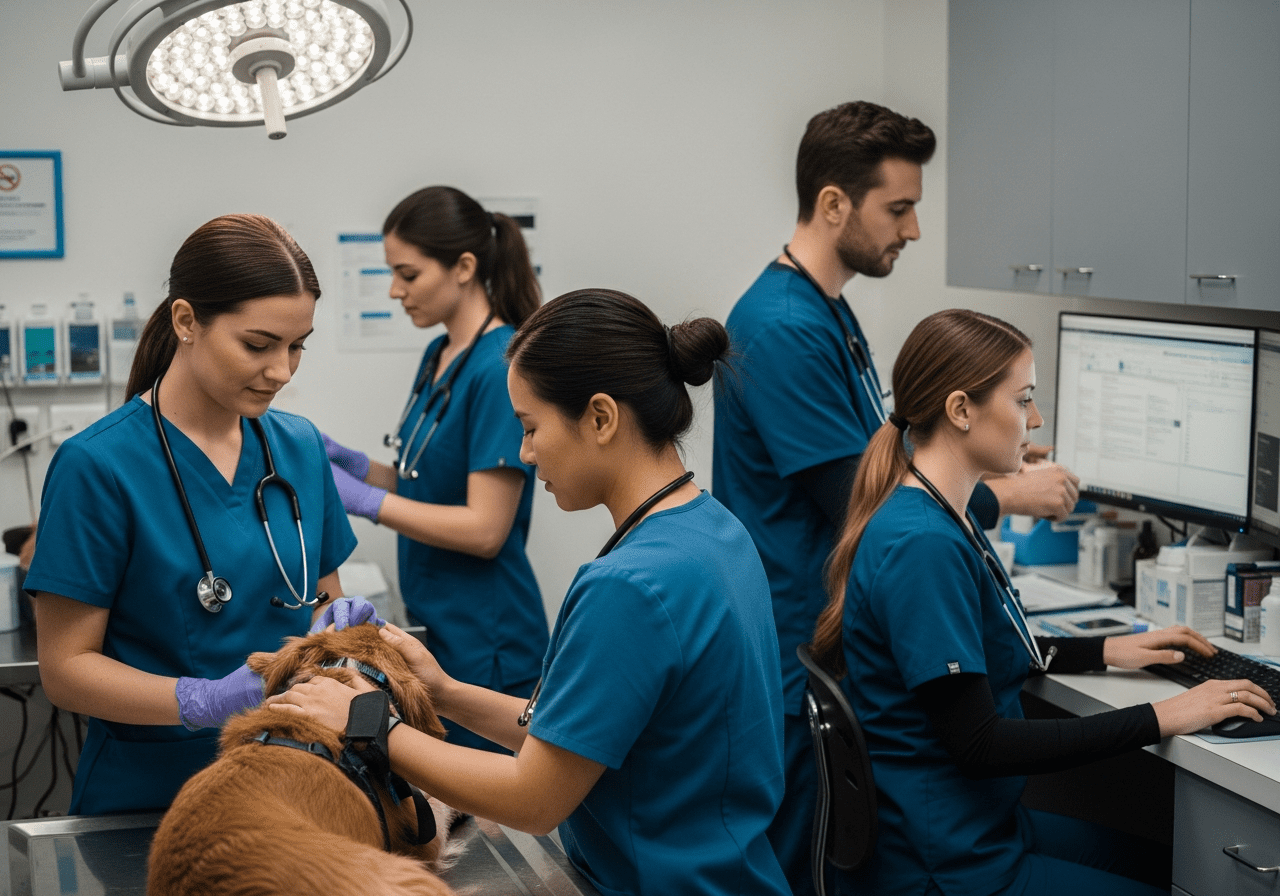
Every practice owner wants to know how to build an effective veterinary team that lasts. Durability is the real goal: a team that stays healthy, stays engaged, and stays, period. This guide covers the strategies that turn a group of hires into an effective veterinary team built for the long run.
The health and performance of your veterinary clinic directly depend on the strength of your vet team. In recent years, the veterinary industry has faced significant challenges, including high rates of employee burnout and injury. This article explores practical strategies to build a durable veterinary team capable of providing excellent patient care while ensuring the well-being of all staff members.
Understanding Burnout and Injury in Veterinary Teams
Veterinarians and clinical staff encounter unique emotional and physical stressors in their daily work. Roles such as Associate Veterinarians, Emergency Veterinarians, and Critical Care Veterinarians experience heightened levels of pressure. Long hours, emotional tolls from patient care, and physical demands lead to significant burnout and injuries. According to various studies, nearly 50% of veterinarians report feelings of burnout at some point in their careers.
To foster a resilient vet team, it’s essential to address these challenges head-on. By implementing targeted strategies, practice owners and managers can enhance employee wellness and operational efficiency, benefiting the clinic overall.
Key Strategies for Building a Durable Vet Team
- Promote Work-Life Balance: Encourage all staff to maintain clear boundaries between work and personal time. Flexibility in scheduling can play a crucial role in reducing stress and preventing burnout.
- Provide Continuing Education: Keep your team informed about the latest best practices in veterinary medicine. This empowerment fosters a sense of competence, enhancing job satisfaction.
- Encourage Open Communication: Establish an environment where clinical staff can voice their concerns without fear of judgment. Regular meetings can enhance team dynamics and foster collaborative solutions.
- Implement Injury Prevention Programs: Focus on ergonomics and safe handling techniques. Regular training sessions on proper lifting and physical care can substantially reduce workplace injuries.
- Recognize and Reward Contributions: Acknowledging individual efforts can boost morale. Simple gestures, such as verbal praise, or formal recognition programs lead to more engaged team members.
Adaptability Across Different Veterinary Roles
The experiences of different veterinary professionals can vary greatly. For instance, General Practice Veterinarians may face routine challenges, while Urgent Care Veterinarians deal with unpredictable caseloads that require rapid responses. Likewise, Shelter Veterinarians often experience emotional fatigue due to high turnover rates and severe cases.
Each role presents unique stressors. Therefore, tailor your wellness strategies to specific team needs. Discussions around mental health resources, peer support networks, or wellness days can significantly impact engagement levels across diverse veterinary roles.
Encouraging Team Resilience
Resilience in the workplace stems from a supportive culture. Community Medicine Veterinarians, often vital in outreach initiatives, can lead community wellness programs that improve morale among various staff. Building an inclusive environment encourages collaboration and nurtures team dynamics.
Consider initiatives such as team-building workshops that focus on enhancing relationships. These activities draw on the strengths of various roles, creating a more cohesive vet team. Additionally, mentorship programs can support newer veterinarians while fostering positive relationships with seasoned practitioners.
Measuring Success and Continuously Improving
Another vital aspect of developing a durable veterinary team involves measuring the effectiveness of your efforts. Regular surveys can gauge staff satisfaction and identify areas for improvement. Monitor burnout levels and adjust strategies as necessary. Regular evaluation ensures your team remains resilient and engaged in the long term.
Frequently Asked Questions
How do you build an effective veterinary team?
Hire for fit as well as skill, define roles clearly, invest in onboarding and mentorship, and protect workloads so burnout does not undo your hiring work.
What makes a veterinary team durable?
Fair scheduling, psychological safety, growth paths, and staffing depth. Teams with relief coverage on standby absorb surprises without breaking.
How does staffing support team durability?
Vacancies overload everyone who stays. Consequently, filling roles fast matters, and many practices keep a specialized veterinary staffing partner ready for both relief and permanent searches. Build deliberately, and your effective veterinary team will outlast every hiring cycle.
Conclusion
Building a durable veterinary team requires a proactive approach toward managing burnout and preventing injuries. By prioritizing employee wellness and fostering a supportive culture, veterinary clinics can enhance their operational efficiency and team dynamics. At Pulivarthi Group, we understand the importance of a resilient workforce. We help veterinary clinics access hard-to-find talent across various roles, ensuring that your team remains strong and capable, ready to deliver exceptional patient care. Implement these strategies in your clinic today and experience the positive changes that follow.